Medical claim processing is a critical part of the healthcare revenue cycle, yet the most fragile one. A small error or delay can have ripple effects, slowing reimbursements and even triggering penalties. With complex payer requirements and constantly evolving regulations, healthcare organizations are doing everything they can to get claims right the first time, but traditional manual approaches are struggling to keep up. Which is why there’s a massive shift towards automation.
The Challenges of Manual Healthcare Claims Data Entry
Relying on in-house manual claims processing in today’s environment can be an expensive mistake, unlike relying on a professional insurance data entry service provider. The challenges that otherwise come with it include:
Slow Claims Resolutions
Truth be told, manual processing is inherently time-consuming. Every claim involves gathering documents, verifying patient and policy details, and performing multiple checks before getting an approval. Each step takes a fine amount of time, and in many cases, claims can sit in queues for days or weeks. The longer the delay, the more pressure it creates on the organization and, of course, the patients.
Inaccuracies
Healthcare claims data entry errors, missing documents, or incorrect calculations are often seen when people are handling claims manually. Even small mistakes can lead to denied claims, a load of rework, or penalties. In a sector where accuracy is non-negotiable, these mistakes carry a high cost. Rannsolve’s claims data entry services are among the top picks for healthcare providers looking to manage claims with greater accuracy.
Inefficiencies
Manual processes are tedious. Employees spend hours on repetitive work that could literally be done faster with technology. When productivity is low, it leads to higher operational costs and can even impact employee morale.
Customer Frustration
Patients and policyholders expect smooth and quick claim settlements (which don’t happen in most cases, unless they are accurate). A long, complicated process causes dissatisfaction and negatively impacts customer relationships. Healthcare organizations risk losing credibility big time if they fail to meet these expectations.
Organizations that stick to manual processes are forced to compromise on one or the other, weakening their competitive position. Which is why turning to automation makes it all easier, although it’s not a one-stop-shop solution.
What Is Claims Process Automation?
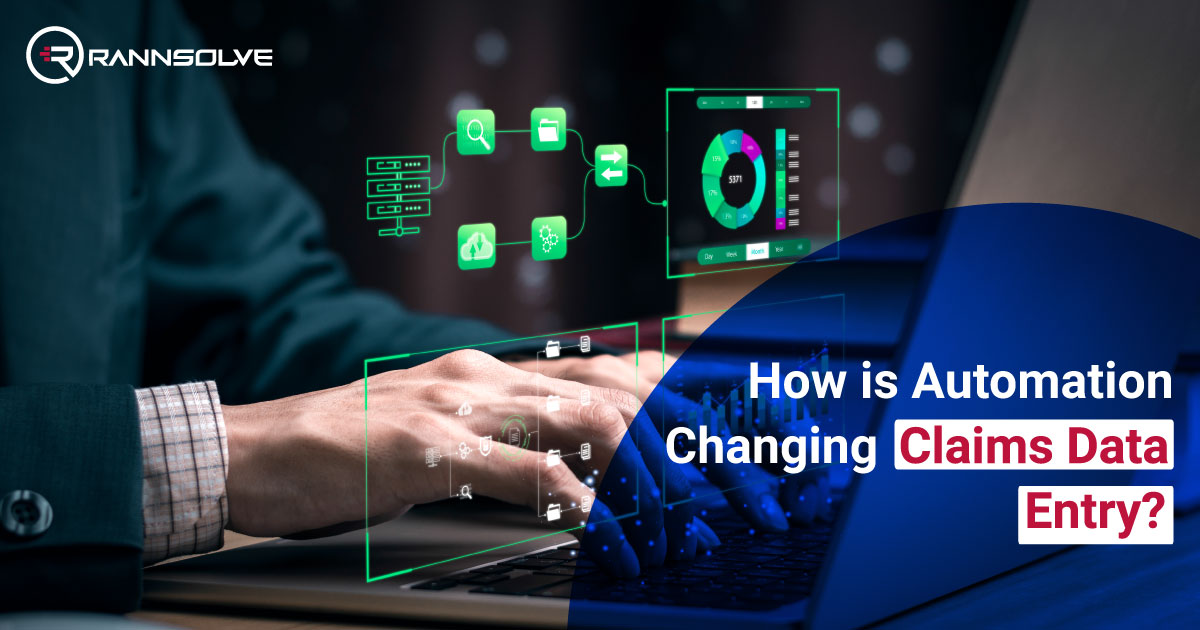
Claims process automation uses technology to handle claims faster and more accurately. Reducing manual intervention and automating what was once done manually makes it easier for organizations to manage the entire lifecycle of a claim.
Automated systems can verify claims, flag inconsistencies, and check payments with minimal human input. They can also scan claim information, check policy details, and ensure regulatory compliance. Beyond efficiency, automation also reduces costs. By handling repetitive and time-intensive tasks, organizations can reallocate staff to more complex and high-value work.
Benefits of Automating Healthcare Claims Data Entry
Automating healthcare claims data entry has multiple benefits. A quick look at a few:
Faster Claims Processing
Automated systems dramatically shorten the time it takes to process a claim. Manual methods involve painstaking healthcare claims data entry. Automation reduces this process from days or weeks to hours in many cases. Claims that used to wait in line can now be resolved quickly, directly benefiting both the organization and the policyholder. Faster claim resolution also sets a company apart in a competitive market, giving it an advantage.
More Accurate and Fewer Errors
Human error is inevitable in manual processes. Automated systems apply rules consistently and perform checks that humans can miss. Technologies like Optical Character Recognition (OCR) can extract information from documents with precision. Automated systems can handle complex calculations and cross-checks instantly. Errors in claim assessments and payouts drop significantly.
Improved Fraud Detection
Automated systems can identify unusual patterns in claims data that may indicate fraud. By continuously analyzing claims, organizations can flag suspicious activity earlier and more accurately than manual methods allow. This proactive approach prevents financial losses and reinforces compliance, making the entire process of managing claims more reliable.
Higher Customer Satisfaction
Automation helps improve that experience in three ways. First, claims are settled faster, meeting expectations for timely service. Second, policyholders can receive real-time updates on their claim status, which keeps them informed and reduces anxiety. Third, automation ensures that claims are handled consistently, reducing the perception of unfairness. With these improvements, your patients experience a smoother, more transparent process.
Healthcare claims data entry is no longer just about typing numbers into a system, unlike traditional ones. While manual approaches struggle to meet these demands, automation provides a way to manage claims efficiently, reduce costs, and improve accuracy.
For companies looking to streamline claims processing, outsourcing insurance data entry services to a specialized partner like Rannsolve can provide both the technology and expertise needed.
Rannsolve, Your Professional Claims Data Entry Services Partner
With 25+ years of expertise in healthcare services, Rannsolve offers comprehensive claims data entry services designed to simplify and improve data management for healthcare organizations. Our insurance data entry service specialists handle data entry and validation with accuracy while maintaining compliance standards. Talk to our claims data entry expert now.
FAQ
Claims data entry is the process of recording and managing information from insurance claims, including policy details, patient data, and payments. Most healthcare facilities outsource claims management to a professional service provider like Rannsolve for higher accuracy and better compliance with regulatory requirements.
Automation helps healthcare facilities manage claims efficiently while lowering costs.
Manual claims data entry is slow, full of mistakes, and takes a lot of effort. It can delay payments, cause errors, and frustrate customers, making it harder for organizations to manage insurance data entry services efficiently.
While automation improves speed and accuracy, human oversight is still important for complex or unusual claims.