Legal work has always run heavily on documents. For decades, law firms built systems around paper because there was no real alternative. That reality is over. The future of legal operations is digital, and there is no path around it.
Data digitization is a strategic shift in how legal firms store information, find it, protect it, and use it to serve clients better. When paired with specialized legal support services, data processing becomes the very engine that moves a firm from reactive to prepared. Every process becomes easier to control. Today, document digitization is not a choice but a requirement for firms that want to be efficient.
What Document Digitizing Services Mean for Law Firms and Why They Matter
Document digitizing services for law firms involve converting physical documents and legacy records into structured digital formats that can be indexed, searched, secured, and maintained over time. This process changes how information exists inside the firm. Files stop being static and start becoming accessible data that supports daily legal work.
This shift comes with advantages that show up quickly in both operations and client service.
Document Indexing For Actionable Insights
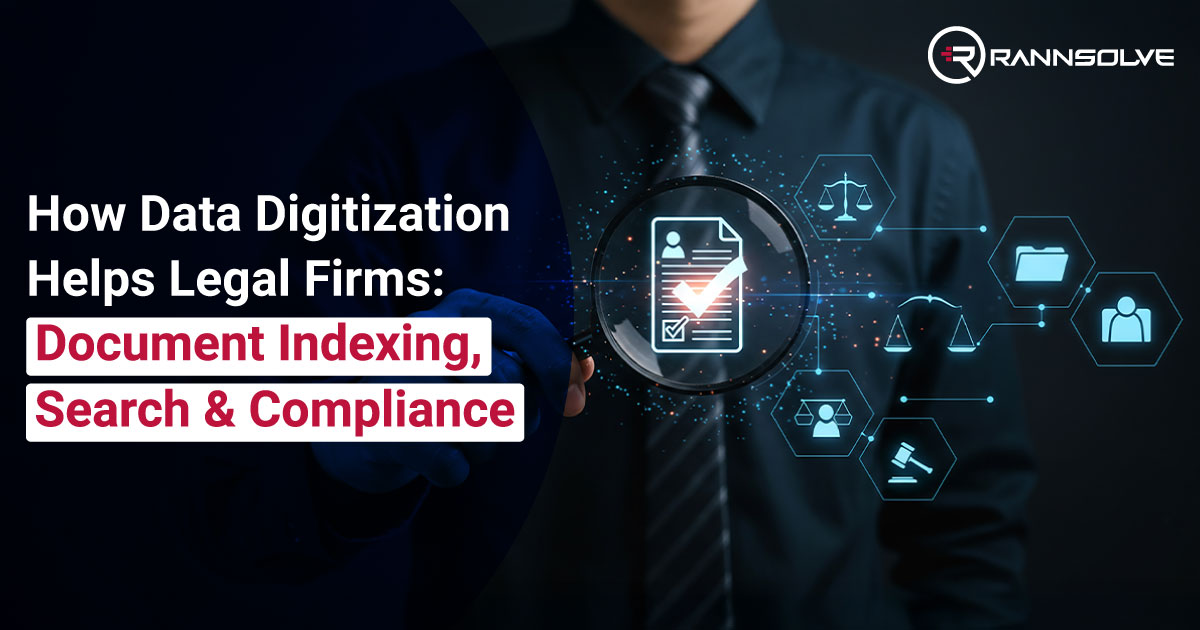
Indexing is the foundation of any effective data processing effort. Without it, digital files become nothing more than scanned clutter. Proper document indexing means every record is tagged and categorized based on case number, client name, document type, date, jurisdiction, or any criteria that fit the firm’s workflow.
For lawyers and paralegals, this means they are no longer relying on memory or manual logs to track where a document is. A brief filed five years ago can be located without digging through boxes or calling support staff. Indexing also helps ensure consistency across cases, which matters when multiple teams handle similar cases or when staff changes over time.
Good document indexing reduces delays and removes the risk of missing key documents during critical hours.
Faster and Smarter Document Search
Once documents are digitized and indexed, search it becomes advantageous rather than a daily headache. Legal teams can retrieve files within seconds using keywords, filters, or metadata. This entirely changes how work gets done at every level of the firm.
Attorneys can prepare for hearings without waiting for file retrieval through document digitization. Paralegals can respond to information requests quickly. Searchable digital records also make internal reviews and audits easier. When leaders need visibility into case activity or document status, the information is already right there and easy to access.
Data Security and Compliance Built Into the Process
Legal firms handle sensitive information every day. Client confidentiality, regulatory requirements, and ethical obligations are not negotiable. Document digitizing services give an upper hand to data security when done correctly.
Digital documents can be protected through encryption, access controls, and user permissions. Firms can define who can view, edit, or share specific files. Activity logs provide a clear record of who accessed what and when. Above all, when audits or compliance checks arise, firms can respond with confidence because their data is organized and accounted for.
Reduced Physical Storage and Operational Overhead
Paper storage is expensive and restrictive. File rooms take up valuable office space, while off-site storage adds costs and delays access to information. By converting physical records into digital files through document digitization, firms reclaim space that can be used for productive work. There is less risk of documents being misplaced or damaged. Over time, the savings add up and the operational model becomes easier to grow.
Supporting Collaboration and Remote Work
Modern legal work is not confined to a single office. Attorneys travel, teams work across locations, and clients expect responsiveness regardless of where their legal counsel happens to be.
Document digitization makes secure remote work possible. Authorized team members can access case files from anywhere without compromising security. Collaboration improves because everyone works from the same source of truth. This flexibility is simply a part of how law firms operate today.
Why Outsourcing Document Digitizing Services Is Important for Law Firms
Data processing requires accuracy, consistency, and attention to every detail. Legal data cannot and shouldn’t leave any room for mistakes. This is where outsourcing document digitizing services becomes an important decision for law firms to take. An experienced data digitization provider like Rannsolve manages document digitization, indexing, and data entry with systems built specifically for high volume and sensitive information. They handle paperwork, client details, invoices, and records with data security and quality controls.
Quality Assurance Through Specialized Expertise
Legal data entry demands accuracy, and every terminology, formatting, and structure matters. Outsourcing providers employ trained professionals who understand legal language and documentation standards. Their teams follow established review processes to ensure accuracy throughout the data input cycle. This level of quality assurance reduces errors that could lead to legal exposure or operational setbacks.
Data Security as a Core Requirement
Security is the first concern for any law firm considering outsourcing. A reputable data processing provider treats confidentiality as a core responsibility. These companies operate under strict security protocols, access controls, and compliance standards designed for sensitive legal data.
Working with an experienced provider gives firms peace of mind that their information is handled with the seriousness it deserves.
Letting Internal Teams Focus on Legal Work
When routine data entry and document digitization are outsourced, internal teams gain a lot of time. Attorneys are able to focus on cases, paralegals support legal strategy rather than paperwork, and administrative staff concentrate on client service instead of file management.
This shift improves productivity without increasing headcount. It also reduces burnout caused by repetitive tasks that hold back skilled professionals.
Faster Turnaround Without Compromising Accuracy
For law firms dealing with tight deadlines or large document backlogs, fast turnaround time is everything. Outsourcing firms specialize in volume processing. They use proven workflows and trained teams to convert physical data into digital formats efficiently. Turnaround times improve without sacrificing quality.
Reducing Human Error in High-Risk Processes
Manual data handling carries a high risk of mistakes. In legal work, even small errors can have serious consequences. Outsourcing providers use updated tools and structured processes to minimize these risks. Document digitizing services make data easier to search, review, and verify. Errors are caught early and records remain reliable over time.
Why Partner With Rannsolve for Legal Document Digitizing Services
Rannsolve offers document digitization and outsourcing services designed for law firms that take accuracy, security, and efficiency seriously. With 25 years of expertise and structured workflows, Rannsolve helps legal firms manage their documents, data, and compliance needs without distraction or risk. Talk to our data digitization expert now.
FAQs
It means converting paper files into secure, searchable digital records using document digitization services so legal teams can access information faster.
Document indexing organizes digital files by the format and structure preferred by the firm and easily accessible without requiring to dig through multiple documents.
Being able to search faster saves time (in fact hours), reduces the chance of missing important details, and improves case preparation by turning files into usable data through data processing.
Yes. Outsourcing document digitizing services improves accuracy, security, and turnaround time.