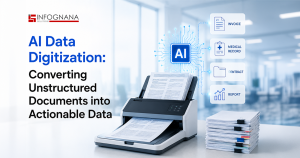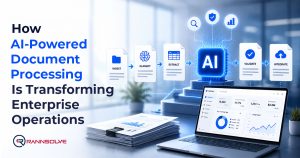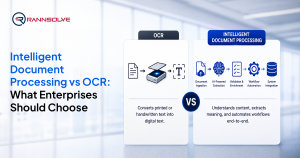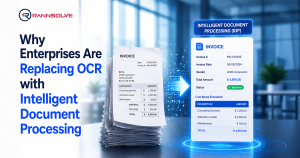
Document conversion service does one simple but crucial job: it takes information from one format and transforms it into another so your business can use it more effectively. That may sound straightforward, but when you’re handling thousands of files across departments, legacy systems, and regulatory requirements, it becomes a strategic function.
A strong document conversion partner doesn’t just move files around. They make your data usable, searchable, secure, and compatible with the systems that keep your business running. Document conversion companies focus on turning static information into something your teams can act on immediately.
The Different Types of File Conversion Services Businesses Rely On
As companies grow, so does the volume of data. Every contract, invoice, medical record, catalog, and report adds to the pile. That information has to be managed properly, stored securely, and protected from misuse or breach. When it sits in the wrong format, productivity slows and risk increases.
Document conversion services step in to make that data functional. They help businesses integrate information into systems and workflows without disrupting operations. Every industry has unique requirements. For example, healthcare has strict compliance and interoperability demands. Data must move safely across different platforms and software systems. Other sectors face similar pressures, relying on document conversion companies to keep operations organized.
Here are the most commonly used services:
XML Conversion
XML conversion turns files into XML format, which is widely used by different software programs and operating systems. If you are working with systems that need structured, machine readable data, XML becomes essential. It helps different applications communicate with each other without losing information in translation.
PDF Conversion
PDF conversion remains one of the most standard and practical services. PDF files are accessible across devices and supported by most systems. Businesses frequently convert Word documents and MS Excel spreadsheets into PDF format to preserve formatting and prevent unauthorized edits. It is the format many companies rely on for sharing contracts, reports, and official records.
HTML Conversion
HTML conversion is often used when content needs to be web-friendly. Search engines read HTML more effectively than many other formats. Companies typically convert Word, PDF, and PowerPoint files into HTML so that their content performs better online and can be easily displayed on websites and internal portals.
Image to Text Conversion
Every business handles images, whether they are scanned contracts, printed forms, or archived records. Image to text conversion takes those image files and transforms them into editable and searchable text. This process often involves optical character recognition. It allows companies to search through what used to be static images and extract usable data from them.
Book Conversion
Book conversion focuses on transforming printed books or manuscripts into ebooks. Once converted, these digital books can be shared easily across systems and accessed on multiple platforms and devices. For publishers, educational institutions, and training departments, this makes distribution and accessibility much easier.
Catalog Conversion
Catalog conversion helps businesses manage product information collected from websites, physical catalogs, and other files. By converting this data into structured digital formats, companies can organize inventory, update product details efficiently, and ensure information is consistent across sales channels.
Each of these services serves a different operational need, but they all support the same objective. They make information usable across systems without forcing your team to work around format limitations.
The Advantages of Using Document Conversion Services
From a leadership perspective, the benefits of document conversion go far beyond simply changing file types. It’s about running a cleaner, more efficient organization.
Outsourcing to document conversion companies provides access to teams experienced in accuracy and consistency. Reputable services often commit to 99% precision, supported by quality checks and professional expertise. That level of reliability matters when handling financial records, healthcare files, or legal documents.
Let’s look at the main benefits.
Paper Piles to Digital Files
One of the most obvious advantages is reducing reliance on paper. Paper documents take up space, require manual handling, and create storage challenges. By converting paper records into digital formats, companies reduce physical clutter and lower the risk of loss or damage. Digital storage is easier to back up and protect.
There is also an environmental angle. Reducing paper use cuts down on waste and lowers your carbon footprint. For companies with sustainability goals, document conversion supports those commitments in a measurable way.
Make Better Use of Office Space
File cabinets and storage rooms do not generate revenue. They occupy valuable square footage that could be used more productively. When documents are digitized, that space becomes available for workstations, collaboration areas, or other operational needs.
A less cluttered workspace also improves focus. Teams think more clearly when their environment is organized. Physical decluttering often leads to operational clarity.
Easier Access and Sharing
Digital documents are searchable, easy to retrieve, and simple to share. Teams save time across departments, recover files after accidental deletion, and distribute information efficiently to clients, partners, or internal users. Document management systems ensure files are centralized, secure, and accessible whenever needed.
Improved Customer Service
Think about how often your team needs to pull up invoices, receipts, catalogs, or agreements. Customers expect quick responses. If those documents are buried in filing cabinets or scattered across incompatible systems, service slows down.
When everything is converted and centrally stored, your team can respond with confidence and speed. That improves customer satisfaction and builds trust. In competitive markets, responsiveness matters.
Remote Access to Critical Files
Modern businesses operate across multiple locations. Digital storage through document management systems enables teams to access files securely from anywhere. Projects keep moving even when employees are distributed across offices or working remotely.
Managing Growth Without Losing Control of Data
As data volumes increase, unstructured paper or scattered digital files create risks and slow operations. Document conversion companies consolidate information into structured, searchable digital repositories. Access becomes faster, oversight improves, and time isn’t wasted hunting for documents.
Flexibility is another benefit. Whether you need XML for integration, PDF for standardized sharing, or HTML for web visibility, document conversion adapts to your needs. Leadership gains control, knowing that information is organized, secure, and ready to support growth rather than hold it back.
Partner with Rannsolve for Document Conversion Services
Rannsolve delivers document conversion services focused on accuracy, security, and efficiency. We understand the demands of growing businesses and provide structured digital solutions that keep your information organized, accessible, and ready to support the next stage of growth. Document conversion companies like ours ensure your documents work as hard as your teams do, and document management systems make that possible across every department. Talk to our data digitization expert now.
FAQs
Document conversion services take files from one format to another, making them usable and compatible with document management systems for easy access.
Businesses use document conversion to reduce paper clutter, improve efficiency, and make data more secure and searchable through document conversion companies.
Files like PDFs, Word documents, images, catalogs, books, and HTML content can be converted using professional document conversion services.
Converted digital files are easier to store, share, and retrieve securely, ensuring critical information is safe in document management systems.
Yes, outsourcing to document management systems.provides accuracy, efficiency, and expert handling of large volumes of data without straining internal resources.